

US importers must prepare for a significant transformation in customs compliance. As of July 8, 2026, the US Consumer Product Safety Commission (CPSC) requires the electronic filing of safety certificates. This new digital system must be completed at the time of customs entry, permanently replacing the traditional paper-based review process.
Goods entering the market from a Foreign Trade Zone (FTZ) have a different compliance timeline, with mandatory requirements taking effect on January 8, 2027. This upcoming shift creates an urgent need for importers to adapt their operations now. Failing to prepare could lead to significant supply chain bottlenecks. Adapting today is critical to maintaining seamless trade operations tomorrow.
Regulatory objectives of CPSC eFiling
Scope of mandatory CPSC eFiling
Required CPSC eFiling data elements
What options are there for CPSC eFiling?
Step-by-step CPSC eFiling preparation guide
Legal and financial risks of non-compliance
Implications of mandatory CPSC eFiling from July 2026 for US importers
Regulatory objectives of CPSC eFiling
The shift towards mandatory eFiling is not merely an administrative update. It represents a calculated upgrade to how the United States manages border security and product safety. The CPSC established these new rules with several distinct regulatory objectives in mind, which it plans to achieve through three key measures.
Transitioning from paper to digital processes
Transitioning away from manual paper submissions aligns with broader technological advancements. Digitized frameworks help government agencies manage massive volumes of records more effectively.
Faster detection of high-risk shipments
Electronic frameworks enable regulators to quickly detect anomalies and target high-risk shipments.
Streamlining clearance for compliant goods
Standardising data elements helps expedite the clearance of fully compliant goods, ultimately reducing friction at the border.
Achieving these regulatory goals requires strict participation from the trade community. Importers must take full responsibility for the accuracy of their supply chain data to avoid unnecessary delays. This process begins with identifying exactly which products fall under the new requirements.
Scope of the mandatory CPSC eFiling
Importers must understand the full scope of the new CPSC requirements to maintain compliance. The mandate covers all finished consumer products subject to applicable safety standards, including low-value shipments. The CPSC has published an initial list of 600 Harmonized Tariff Schedule codes that are likely to trigger eFiling.
Heavily monitored categories include:
- All-terrain vehicles
- Bicycle helmets
- Clothing
- Toys
- Mattresses
- Button-cell batteries
The general enforcement date applies to almost all covered goods from July 8, 2026. However, a notable exception exists for products admitted into a Foreign Trade Zone (FTZ). Goods entering these specially designated areas have an extended compliance deadline of January 8, 2027. Importers should check with their logistics partners to determine whether their imported goods pass through these zones.
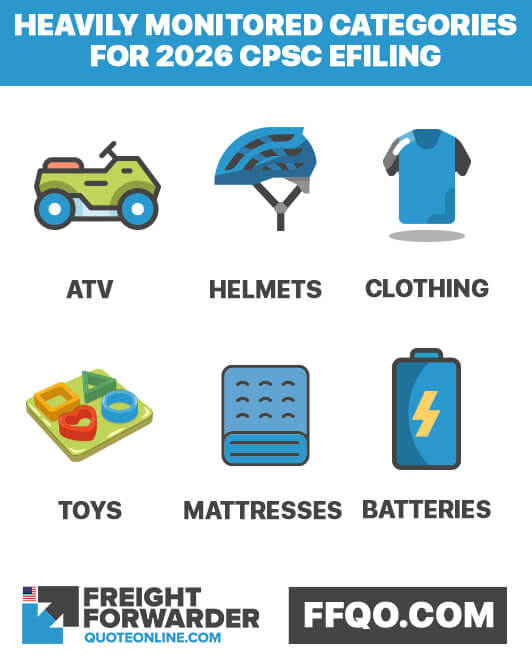
List of heavily monitored categories for 2026 CPSC eFiling
Required CPSC eFIling data elements
The shift to eFiling means that keeping a paper certificate on file at your office is no longer sufficient. The CPSC now requires highly detailed data points to be submitted electronically through the CBP ACE system. This demands a meticulous approach to data collection and record-keeping. Each electronic filing must include precise identification details. To ensure full compliance, importers must submit several specific data elements.
The CPSC requires the following information to be filed electronically:
- Identification and detailed description of the finished product
- Each specific consumer product safety rule the product complies with
- Contact information for the party certifying compliance
- Exact date and location where the product was manufactured
- Date and location where the product and applicable components were tested
- Contact information for the individual maintaining the test records
- Formal importer attestation of compliance
Gathering this data early is highly recommended. Missing any of these details could disrupt the customs entry process. Importers should coordinate with their suppliers to secure this information as soon as possible. Your customs broker will need these exact details before the shipment arrives.
What options are there for CPSC eFiling?
Importers generally have two distinct methods for handling the electronic submission of data to US Customs. You should review these options carefully to ensure an efficient clearance process and choose the filing approach that best suits your overall shipment volume.
Full PGA Message Set
The first option requires the importer to submit all required certificate data from scratch. This full submission must be completed each time an entry is filed. This method is typically better suited to businesses that only import regulated goods occasionally.
Reference PGA Message Set via the CPSC Product Registry
The alternative allows businesses to upload their data to a secure online platform in advance. They can then reference this pre-existing data for future shipments, saving considerable time and reducing repetitive data entry. This method is highly recommended for frequent importers managing larger product catalogues.
Step-by-step CPSC eFiling preparation guide
Importers should follow a structured approach to prepare for the new requirements. Taking action now can help prevent costly delays when the mandate takes effect. Here are the practical steps to implement before the deadline.
Conduct a comprehensive product audit
Review your product catalogue to identify all regulated items. Confirm exactly which certificates are required for each specific product. Importers can use tools such as the CPSC Regulatory Robot to help identify applicable safety requirements. Checking the CPSC guidance list of HTS codes is also a useful starting point.
Gather testing and manufacturing data
Start gathering testing and manufacturing data from your suppliers and testing laboratories immediately. Secure details such as manufacturing locations, test dates and record-keeper contact information. Make sure your partners understand exactly what information you need and when you need it.
Select your preferred filing method
Review your options and choose between the Full and Reference filing methods. Base this decision on your shipment volume and internal systems. Frequent importers should consider registering for a CPSC Product Registry account to save time. Discuss these options with your customs broker to confirm the best fit for your circumstances.
Check your data for accuracy
Incomplete or inaccurate data can create serious problems at the border. Therefore, carefully review your certificate data for errors before the mandate takes effect.
Pay close attention to the following:
- Product descriptions
- Safety rules
- Tariff classifications
Every detail must align accurately with your customs entry documents.
Update your internal workflows
Ensure data collection is integrated into the earliest stages of the supply chain process. Update your compliance, logistics and purchasing workflows so that information is collected as early as possible. Share this information with your customs broker well before the entry filing. Finally, ensure all personnel involved in importing goods into the United States receive appropriate training.
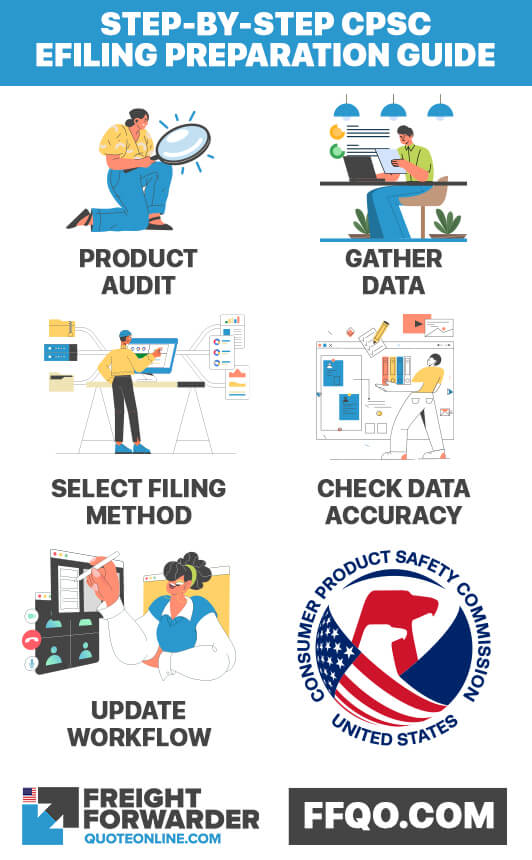
Step by Step CPSC eFiling guide
Legal and financial risks
Non-compliance with the 2026 CPSC eFiling mandate carries significant operational, financial and legal consequences. Businesses that fail to take this regulatory change seriously could face substantial penalties and potentially severe disruptions to their supply chains.
Border disruptions and enforcement
If certificate data is missing, inaccurate or incomplete at the time of entry, shipments may be subject to immediate holds or intensive cargo examinations.
CPSC examinations can hold up cargo for extended periods, resulting in:
- Significant storage
- Demurrage
- Handling costs
Ultimately, CBP may refuse admission of non-compliant goods.
Legal review and contract updates
The legal implications of becoming the certifying importer of record are significant. Companies should engage legal counsel to conduct a regulatory scope assessment, mapping all applicable SKUs, components and private-label products. Importers should also review and renegotiate supplier contracts, warranties and indemnities to clearly allocate responsibility for the costs of mandatory testing and potential recalls.
Civil penalties and liability mitigation
Submitting false or incomplete statements to US Customs can trigger substantial civil or, in some circumstances, criminal penalties. Product recalls and enforcement actions can also drain significant financial resources while causing long-term damage to customer relationships and brand reputation. Businesses should immediately review their product liability insurance, product recall insurance and voluntary response plans to help mitigate these financial risks.
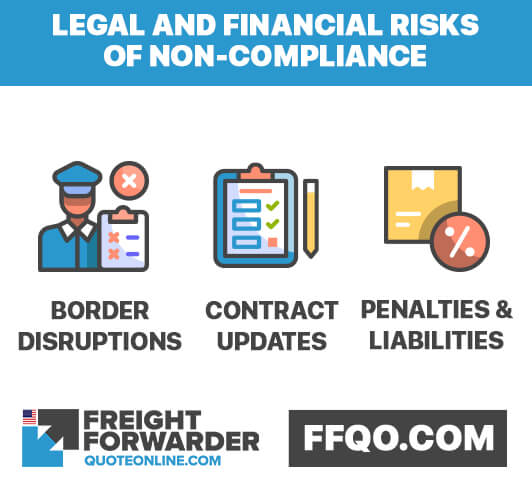
Legal and non financial risks of non-compliance to the CPSC eFiling
Need help with US import compliance and processes?
Navigating the new CPSC eFiling mandate requires significant technical expertise. Managing these digital certificate requirements independently can easily lead to unexpected customs delays. Freight Forwarder Quote Online maintains established relationships with leading customs brokers and supply chain partners to help ensure your regulated products meet the strict July 2026 deadline efficiently.
Our specialised team can answer your questions about product certificates and help ensure complete clarity around the requirements. We can also help you integrate this vital data early in your supply chain process. Our customised freight forwarding solutions enable the fast and transparent movement of goods while helping you comply with changing regulations. Our dedicated professionals are available to answer any questions you may have about specific HTS codes.
If you are looking for a partner to streamline your international supply chain, contact us online and send us a message. You can also message us on LinkedIn for assistance with your international shipping.


